
Recognizing the Signs of Menopause
Menopause is defined as the point 12 months after your last menstrual period, but the hormonal shift that drives its symptoms — perimenopause — can begin years earlier. For many women, the transition starts in the early-to-mid 40s, and the symptoms can be significant long before a formal diagnosis is made.
The most recognized symptoms are hot flashes and night sweats, but they’re far from the whole picture. Sleep becomes fragmented and unrestorative. Weight accumulates around the midsection despite no real change in diet or activity. Brain fog sets in — that frustrating inability to recall words, stay focused, or think with the same sharpness you’ve always had. Mood becomes harder to regulate, with many women experiencing increased anxiety, irritability, or a low emotional baseline that feels foreign to them.
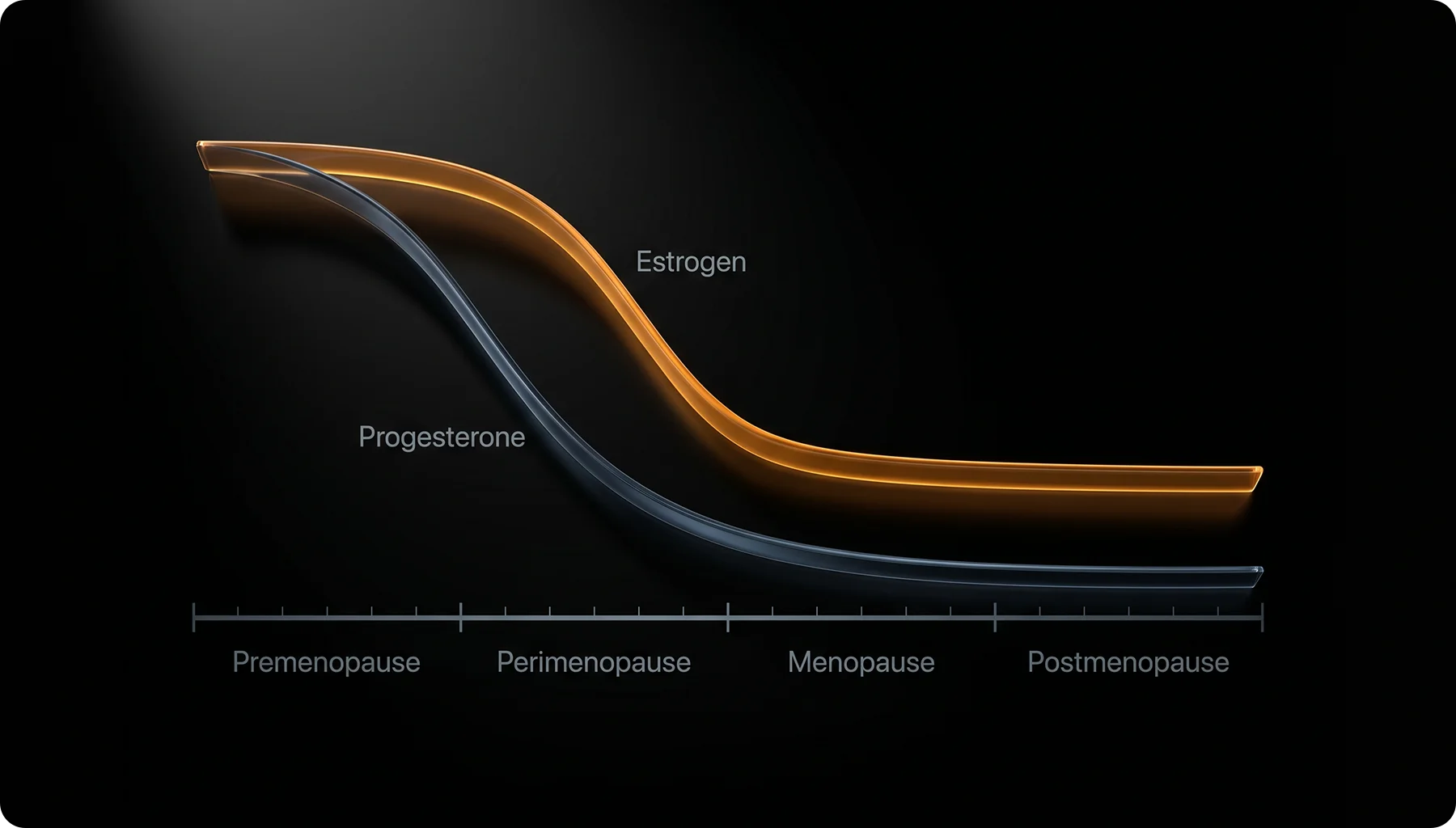
Image: Menopause isn’t a switch. It’s a slope that starts years before the diagnosis — and the symptoms follow the curve.
Then there are the symptoms that often go unspoken: reduced libido, vaginal dryness, changes in sexual function, and a loss of the physical confidence that comes with feeling comfortable in your own body. These aren’t minor inconveniences. They affect relationships, work performance, and quality of life in real and measurable ways.
The root cause is the decline of estrogen, progesterone, and testosterone — three hormones that work as a system. When they drop, everything downstream feels the effect. At Dynamis, we assess your full hormonal picture and build a protocol designed to restore balance and help you reclaim the vitality that menopause has been taking from you.
Benefits of Treating Menopause
- Relief From Hot Flashes and Night Sweats
Hormone replacement therapy is the most effective treatment available for vasomotor symptoms. Restoring estrogen levels reduces the frequency and intensity of hot flashes and night sweats, allowing you to sleep through the night and move through your day without interruption. - Restored Sleep, Mood, and Mental Clarity
Declining hormones directly disrupt sleep architecture and emotional regulation. HRT addresses these issues at their source, helping stabilize mood, reduce anxiety, and restore the cognitive sharpness that menopause-related brain fog erodes. - Improved Body Composition and Metabolism
Estrogen plays a significant role in how your body distributes fat and maintains muscle. Replacing it helps slow the metabolic changes menopause accelerates — making it easier to maintain a healthy weight and preserve lean mass. - Long-Term Bone and Cardiovascular Protection
Estrogen is critical for bone density and cardiovascular health. Declining levels accelerate bone loss and shift cardiovascular risk. Appropriately managed HRT supports long-term protection in both areas when initiated at the right time.
What Is Menopause?
Menopause is the natural biological process marking the end of a woman’s reproductive years, driven by the ovaries gradually reducing production of estrogen and progesterone. Testosterone — often overlooked in women’s hormone health — also declines significantly during this period. The average age of natural menopause in the U.S. is 51, though surgical menopause (following removal of the ovaries) can occur at any age and typically produces more abrupt symptom onset.
The conversation around menopause treatment has shifted considerably in recent years. Earlier concerns about hormone therapy have been revisited and refined, and current evidence supports the use of HRT — particularly when initiated within 10 years of menopause onset — as safe and effective for most women without contraindications.
At Dynamis, we take a comprehensive approach. We test estrogen, progesterone, testosterone, thyroid markers, DHEA, and a full metabolic panel before making any recommendations. Treatment is built around your specific hormone levels, your symptom profile, and your goals — not a generic protocol.
What “optimal” looks like varies from woman to woman. Our providers take the time to understand not just your labs but your lived experience — because the goal isn’t just to hit a number on a reference range. It’s to help you feel well, function fully, and move through this chapter with confidence.