
Recognizing the Signs of Chronic Joint Pain
Joint pain is one of the most common complaints in adults over 40 — and one of the most undertreated in any meaningful sense. Most people are offered anti-inflammatory medications for symptom relief and advised to reduce activity. The underlying drivers — inflammation, hormonal imbalance, impaired regenerative capacity — are rarely addressed.
The experience varies: a persistent ache in the knees that makes stairs uncomfortable. Shoulder stiffness that limits overhead movement and disturbs sleep. Hip discomfort that alters your gait. Elbow or wrist pain that appears with repetitive use and lingers well after the activity ends. Morning stiffness that takes increasingly long to work through. The common thread is that these symptoms reduce your capacity to do things you want to do — and that they tend to progress if the underlying environment driving them isn’t changed.
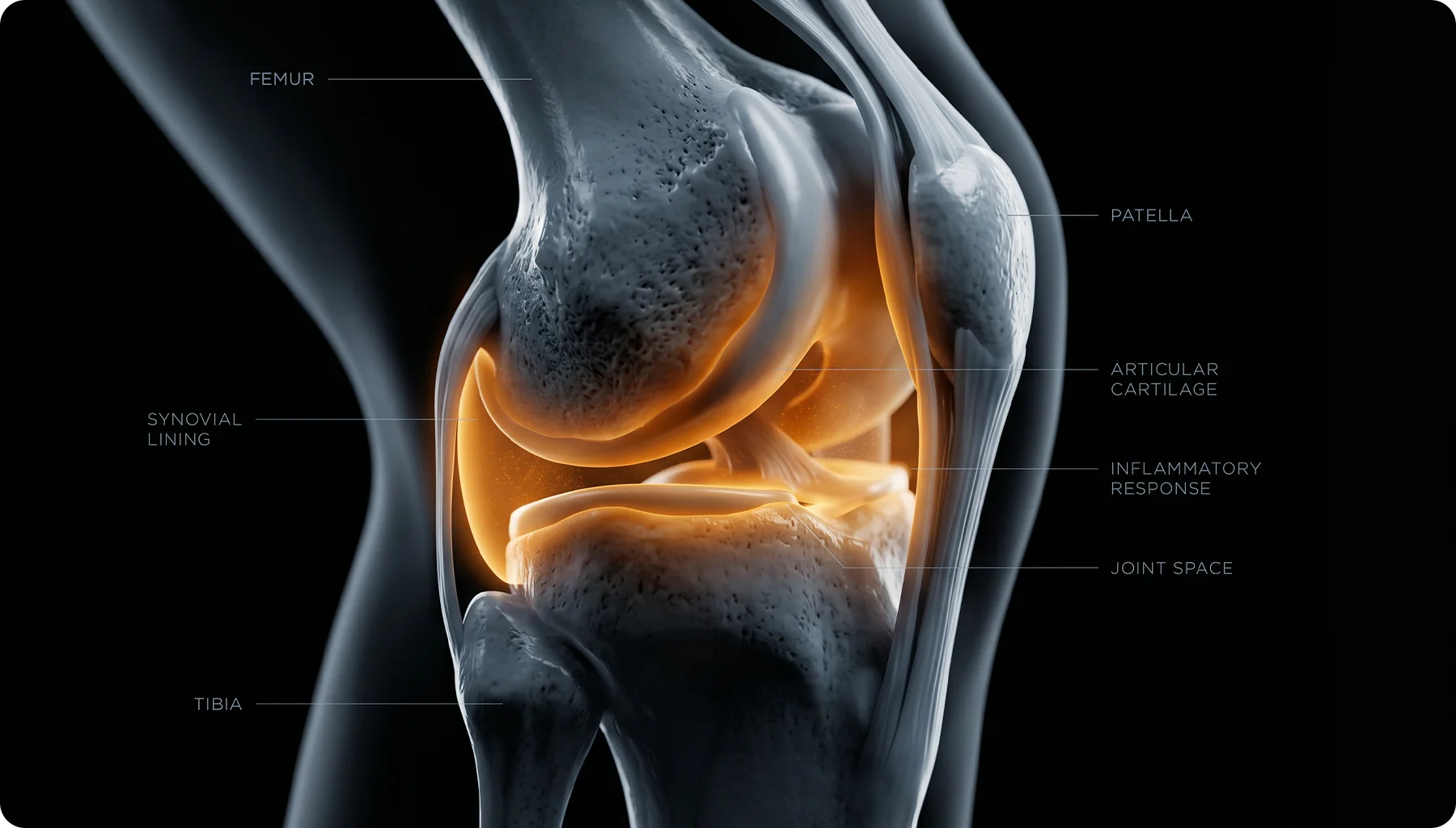
Image: The pain isn’t in the bone. It’s in the environment the bone lives in. Calm the inflammation and the joint follows.
Chronic inflammation is the primary physiological driver of most joint pain. Inflammatory cytokines degrade joint cartilage, impair synovial fluid production, and create a tissue environment that heals slowly and breaks down quickly. Hormonal factors accelerate this process: low testosterone reduces the body’s capacity for tissue repair and anti-inflammatory regulation. Low estrogen (in women) removes a protective influence on joint tissue and contributes to the joint pain many women experience during menopause. Growth hormone decline impairs the tissue regeneration that joints depend on.
Tendons and ligaments are especially vulnerable. Unlike muscle, they have poor blood supply and regenerate slowly without specific support. This is exactly where targeted peptide therapy — particularly BPC-157 — produces results that conventional approaches simply can’t replicate.
Benefits of Treating Joint Pain at Dynamis
- Reduced Pain and Inflammation
Targeting the inflammatory pathways and tissue environment driving joint pain — through peptide therapy, hormone optimization, and appropriate supplementation — produces meaningful reductions in chronic pain without reliance on NSAIDs or other symptom-masking medications. - Accelerated Tissue Repair and Healing
Peptides like BPC-157 directly stimulate collagen synthesis and tissue repair in joints, tendons, and ligaments — accelerating recovery from both chronic wear and acute injury in ways that go beyond what rest and conventional therapy achieve. - Restored Range of Motion and Function
As inflammation decreases and tissue integrity improves, range of motion returns and functional movement becomes less restricted — helping patients return to training, daily activities, and quality of life that joint pain has been limiting. - Slowed Long-Term Joint Deterioration
By improving the hormonal and regenerative environment, Dynamis protocols address the conditions that accelerate joint breakdown — offering a genuine disease-modifying approach rather than just symptom management.
What Drives Chronic Joint Pain?
Joints are complex structures that depend on healthy cartilage, synovial fluid, ligaments, tendons, and the surrounding musculature to function without pain. When any of these components deteriorates faster than it can be repaired, pain and dysfunction follow. The question worth asking — and the one that conventional care too rarely pursues — is why deterioration is outpacing repair.
Chronic systemic inflammation is the most pervasive driver. Elevated inflammatory markers — C-reactive protein, IL-6, and others — reflect an immune environment that is actively degrading joint tissue. This inflammation is driven by a range of factors including poor metabolic health, chronic stress, sleep deprivation, and hormonal imbalance. It is not simply an inevitable consequence of aging — it is a measurable and addressable physiological state.
Hormones regulate the body’s repair capacity in ways that directly affect joint health. Testosterone supports the synthesis of connective tissue proteins and the anti-inflammatory pathways that protect joints. Estrogen protects cartilage integrity and joint lubrication in women. Growth hormone and IGF-1 drive the tissue regeneration that keeps tendons and ligaments functional and resilient. When these hormones decline, the body’s capacity to maintain joint integrity weakens.

Image: Stairs, hills, trails — all the things that hurt now don’t have to. Mobility is a function of what’s happening at the joint, not how old you are.
Peptide therapy — particularly BPC-157 and TB-500 — represents a targeted therapeutic approach to tissue repair that addresses what hormonal optimization alone cannot. BPC-157 promotes angiogenesis (new blood vessel formation) in connective tissue, stimulates collagen synthesis, and accelerates healing in structures with naturally limited blood supply. TB-500 promotes cell migration and tissue regeneration more broadly. Together, these tools address joint health at the cellular level.