
Recognizing the Signs of Poor Gut Health
Gut health problems don’t always announce themselves through obvious digestive symptoms. Bloating and abdominal discomfort are the clearest signals — but poor gut health can also manifest as persistent fatigue, brain fog, skin conditions like eczema or acne, frequent illness, food sensitivities that seem to be expanding, and mood dysregulation. These are the connections that most people don’t make — and that conventional care rarely explores.
The digestive symptoms themselves exist on a spectrum. At one end: occasional bloating, irregular bowel movements, mild discomfort after certain foods. At the other: chronic reflux, persistent abdominal pain, significant changes in bowel habits, and the uncomfortable daily reality of a digestive system that feels constantly reactive. Most people with gut health issues live somewhere in the middle — functional enough to get through the day, but aware that something isn’t right.
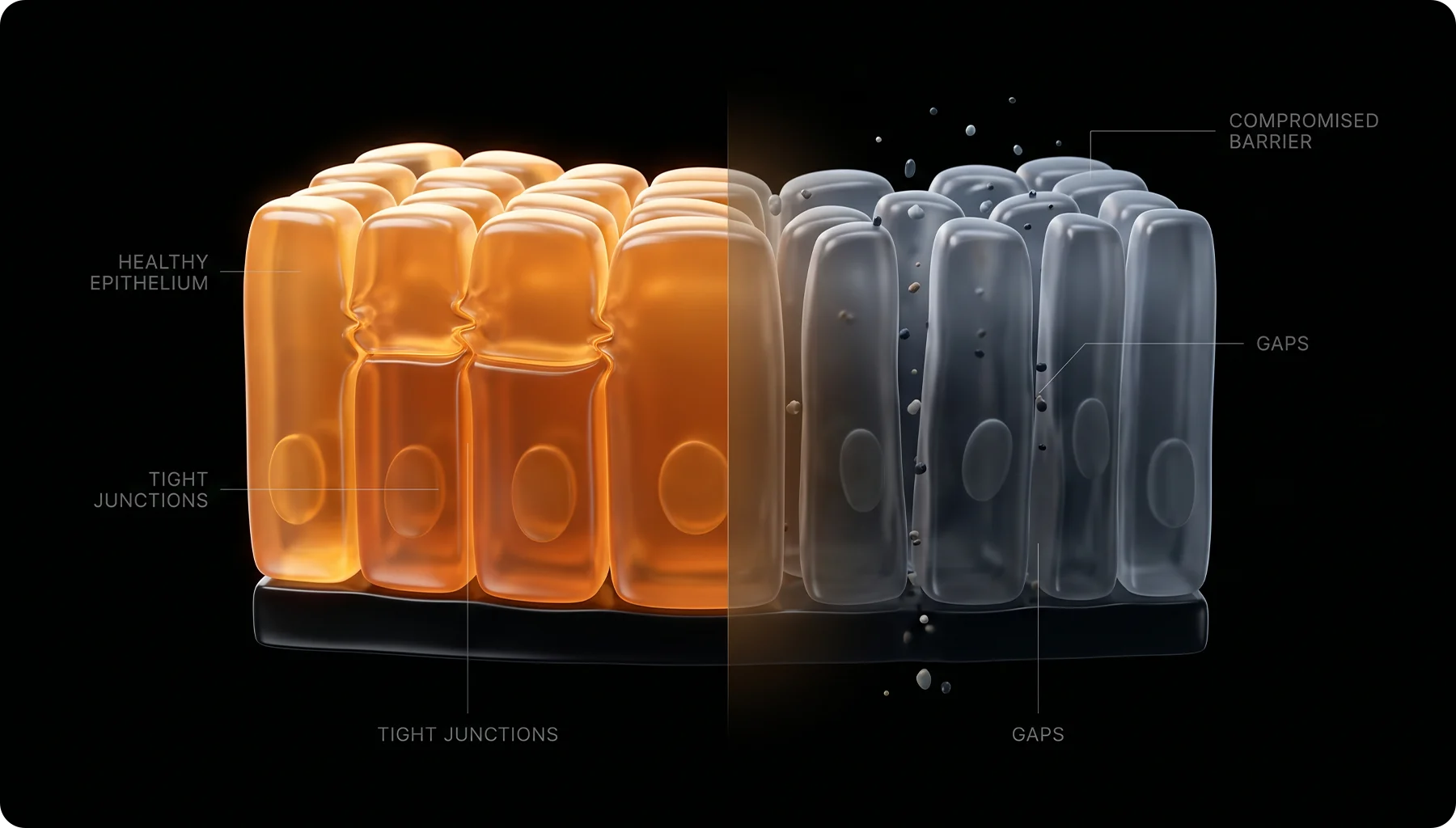
Image: The barrier isn’t a metaphor. When the cell junctions of your gut lining loosen, the symptoms reach far beyond digestion.
Intestinal permeability — often referred to as leaky gut — is a state in which the tight junctions of the intestinal lining become compromised, allowing bacterial byproducts, undigested proteins, and other molecules to cross into the bloodstream and trigger systemic inflammation. This mechanism connects gut dysfunction to conditions far removed from the digestive tract: joint pain, brain fog, hormonal disruption, skin conditions, and fatigue all have documented connections to intestinal permeability.
Chronic stress, poor sleep, antibiotic use, a diet high in processed foods, and NSAID use are all known to damage the intestinal lining and disrupt the gut microbiome. Many people’s gut health issues are the cumulative result of years of exposure to these factors — and the gut’s capacity for self-repair has been quietly outpaced.
Benefits of Treating Gut Health at Dynamis
- Reduced Bloating, Discomfort, and Digestive Symptoms
Targeted gut healing protocols — particularly BPC-157 peptide therapy — directly support repair of the intestinal lining, reduce gut inflammation, and improve the digestive function that chronic gut issues have been disrupting. - Improved Energy and Nutrient Absorption
A compromised gut lining impairs the absorption of the nutrients your body depends on — contributing to fatigue, hormonal imbalance, and poor recovery. Restoring gut integrity improves the absorptive environment that your overall health protocol runs on. - Reduced Systemic Inflammation
Much of the chronic systemic inflammation that drives conditions ranging from brain fog to joint pain to hormonal disruption has its origin in the gut. Healing the intestinal lining reduces the inflammatory load that impaired gut health produces throughout the body. - Better Mood, Cognition, and Immune Function
The gut-brain axis is a real and clinically significant communication pathway. A healthier gut microbiome and reduced intestinal inflammation produce measurable improvements in mood, cognitive clarity, and immune resilience.
What Is Poor Gut Health?
The gastrointestinal tract is responsible for far more than digestion. It houses approximately 70% of the body’s immune tissue, produces a significant proportion of the body’s serotonin, and communicates directly with the brain through the vagus nerve and the enteric nervous system. The gut microbiome — the trillion-organism ecosystem of bacteria, fungi, and viruses living in the intestinal tract — influences everything from hormone metabolism to neurotransmitter production to inflammatory tone.
Poor gut health is not a single diagnosis but a spectrum of dysfunctions that can include dysbiosis (imbalance in the gut microbiome), intestinal permeability, chronic low-grade gut inflammation, impaired motility, and compromised digestive enzyme function. These conditions often co-exist and reinforce each other — which is why addressing gut health requires a systemic approach rather than a single targeted intervention.
BPC-157 — a peptide derived from a protective protein found in human gastric juice — has emerged as one of the most effective and targeted tools for gut repair. Research has demonstrated its ability to promote healing of the intestinal lining, reduce gut inflammation, support angiogenesis in gut tissue, and protect against the damage caused by NSAIDs, alcohol, and other gut-damaging exposures. At Dynamis, BPC-157 is the centerpiece of our gut healing protocols — used alongside microbiome support, nutritional guidance, and lifestyle coaching for a comprehensive approach.

Image: Gut health is what’s left when food and biology are aligned — not a diet, a system that finally responds to what you eat.
Hormones also play an important and underappreciated role in gut health. Estrogen influences gut motility and the microbiome composition. Thyroid dysfunction significantly affects digestive speed and function. Chronic cortisol elevation — driven by stress — directly damages the intestinal lining and disrupts the microbiome. At Dynamis, we look at gut health within the context of the full hormonal picture.