
Recognizing the Signs of Hormonal Hair Loss
Hair loss is rarely a single dramatic event — it’s a gradual process that most people notice only once it has already been progressing for some time. More hair in the shower drain. A hairline that seems to have quietly moved. A part that looks wider. A ponytail that isn’t as thick as it used to be. By the time the loss is clearly visible, the underlying process has typically been underway for months or years.
The most common form of hair loss in both men and women is androgenetic alopecia — pattern baldness — which is driven by genetic sensitivity to dihydrotestosterone (DHT), a potent androgen derived from testosterone. In men, this typically presents as a receding hairline and thinning at the crown. In women, it more often produces diffuse thinning at the top of the scalp with the hairline largely intact.
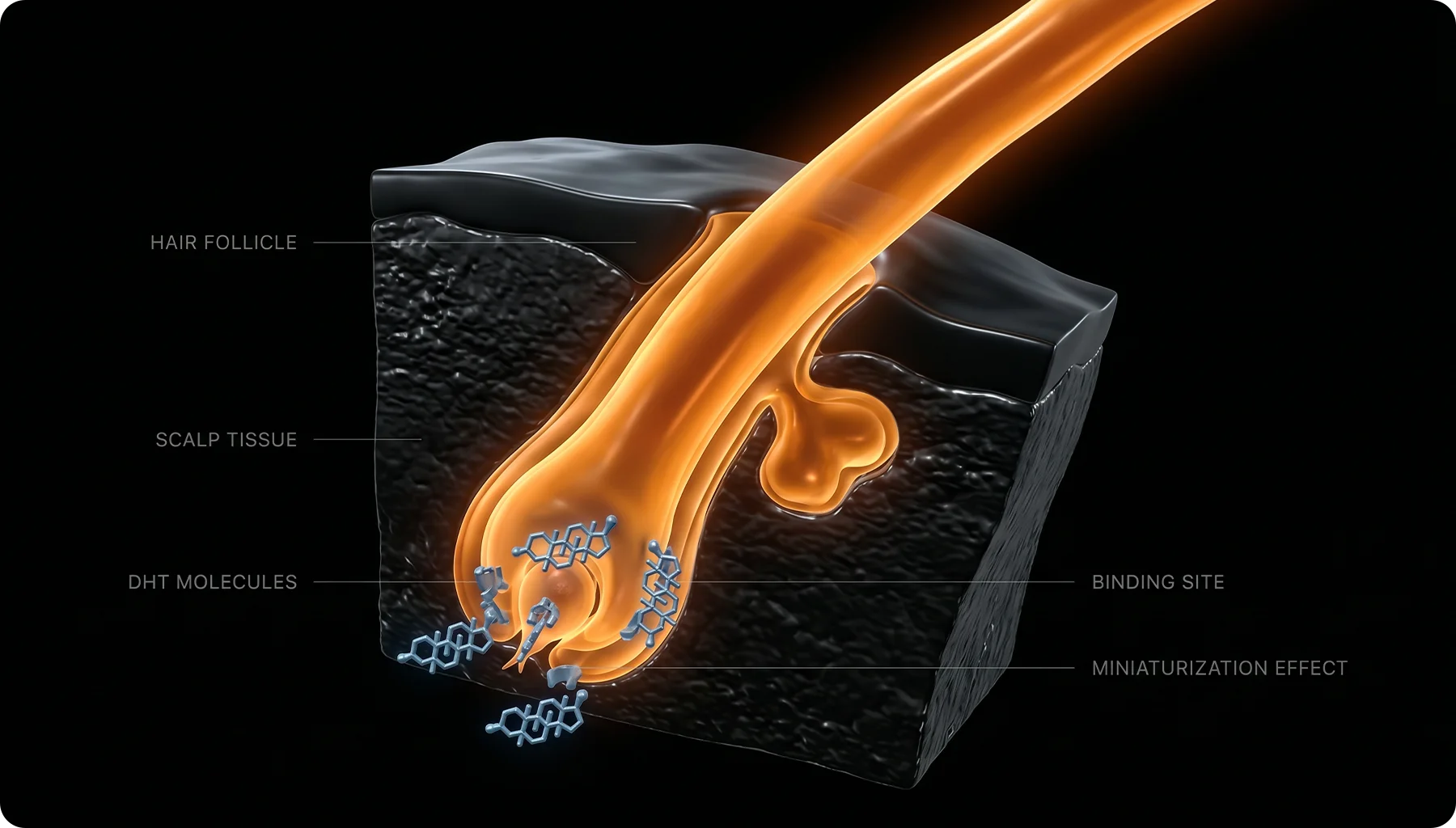
Image: Pattern hair loss isn’t about scalp products. It’s about what DHT is doing at the follicle base — and what’s amplifying its effect.
But hormonal hair loss extends beyond DHT sensitivity. Thyroid dysfunction — both hypothyroidism and hyperthyroidism — is one of the most common and most frequently missed causes of significant hair shedding. Low testosterone in women can contribute to hair thinning. Elevated cortisol from chronic stress triggers a condition called telogen effluvium, in which a disproportionate number of follicles shift to the shedding phase simultaneously. Estrogen decline during menopause accelerates hair loss in many women.
Understanding which mechanism is driving your hair loss is essential to choosing the right treatment. A protocol built for DHT-driven androgenetic alopecia is different from one addressing thyroid-related shedding — which is why Dynamis starts with comprehensive lab work before making any recommendations.
Benefits of Treating Hair Loss at Dynamis
- Slowed Progression and Reduced Shedding
Effective treatment — particularly when started early — can significantly slow or halt the progression of hair loss, preserving what you have while creating the conditions for regrowth. - Stimulated Regrowth in Affected Areas
Targeted treatments including DHT blockers and topical peptide therapy can reactivate follicles that have been miniaturized but not lost — producing measurable regrowth over the course of a consistent treatment protocol. - Addressed Root Cause, Not Just Symptoms
By identifying and treating the hormonal drivers behind hair loss — whether DHT, thyroid, estrogen, or cortisol — Dynamis protocols address the cause rather than just the surface manifestation. - Restored Confidence and Appearance
Hair is closely tied to self-image. Patients who achieve meaningful results in slowing or reversing hair loss consistently report improvements in confidence and wellbeing that extend well beyond the physical outcome.
What Causes Hair Loss?
Hair grows in cycles: a growth phase (anagen), a transitional phase (catagen), and a resting and shedding phase (telogen). Hair loss occurs when this cycle is disrupted — either by factors that shorten the growth phase, shift more follicles into the shedding phase simultaneously, or cause follicle miniaturization over time.
Androgenetic alopecia is the most prevalent form of hair loss in both sexes. DHT — produced when the enzyme 5-alpha reductase converts testosterone — binds to receptors in hair follicles on the scalp and progressively miniaturizes them, shortening the growth cycle until the follicle eventually stops producing visible hair. Genetic sensitivity to DHT, not testosterone level itself, determines susceptibility.
Thyroid dysfunction is the second most important hormonal contributor to hair loss. Both hypothyroidism and hyperthyroidism can cause significant diffuse shedding — and because thyroid issues are common and often subclinical, this cause is frequently missed in standard evaluations. Full thyroid testing (TSH, free T3, free T4, and thyroid antibodies) is essential for an accurate picture.

Image: Diffuse thinning in women is the most missed hormonal signal in medicine. The hair returns when ferritin, thyroid, and androgen balance return.
For women, the hormonal transition of menopause creates a convergence of factors that accelerate hair loss: declining estrogen (which had been protective), rising relative androgens, elevated cortisol, and often suboptimal thyroid function. This is why hair loss in women in their 40s and 50s is so common and can feel so abrupt.
At Dynamis, we assess DHT-related markers, thyroid function, sex hormones, cortisol patterns, and key nutritional indicators before building a protocol — because effective treatment starts with knowing what’s actually driving the loss.