
Recognizing the Signs of Hormonal Weight Gain
Not all weight gain is the same. There’s a meaningful difference between gradual weight change driven by lifestyle factors and the kind of stubborn, seemingly inexplicable accumulation that doesn’t respond the way it should to diet and exercise. If you’ve been eating well and staying active but the scale keeps climbing — or simply won’t move — your body may be working against you at a hormonal level.
Hormonal weight gain tends to concentrate in specific areas: around the midsection in men, and around the hips, thighs, and abdomen in women. It often comes packaged with fatigue, because the same hormonal imbalances driving fat accumulation are also disrupting energy metabolism. You may notice that you’re hungrier than you used to be, that cravings are harder to manage, or that you recover more slowly from physical activity than you once did.
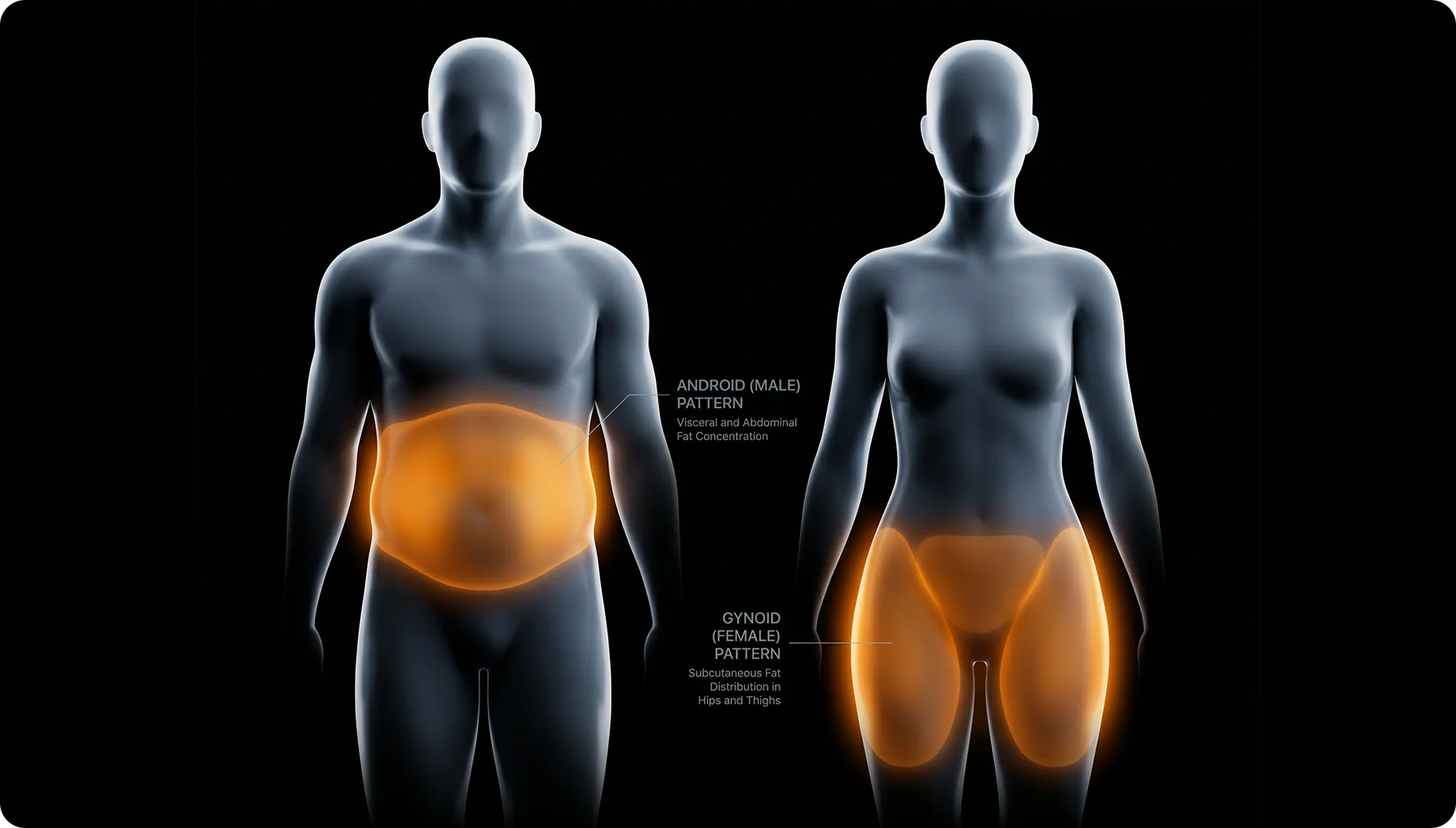
Image: Hormones decide where fat goes, not just how much. Your distribution pattern is a clue, not a character flaw.
For women, shifts in estrogen and progesterone, during perimenopause and menopause, directly alter how the body stores fat and responds to insulin. For men, low testosterone accelerates fat accumulation while simultaneously making it harder to build and maintain the lean muscle mass that supports metabolic rate. In both cases, the hormone picture is inseparable from the weight picture.
GLP-1 medications like Tirzepatide have changed what’s possible in medical weight loss — but medication alone is never the whole answer. At Dynamis, we combine effective pharmacological tools with hormone optimization, lab-guided protocols, and hands-on coaching to address the full picture.
Benefits of Treating Hormonal Weight Gain
- Meaningful, Sustainable Weight Loss
By addressing the hormonal and metabolic drivers of weight gain alongside evidence-based medications, Dynamis patients achieve results that go beyond what diet and exercise alone can produce — and that are built to last. - Reduced Appetite and Improved Hunger Regulation
GLP-1 therapies work by modulating the body’s hunger signaling system, reducing appetite, slowing gastric emptying, and improving insulin sensitivity. For many patients, this is the first time food has felt manageable in years. - Improved Energy and Metabolic Function
Restoring hormonal balance — particularly testosterone and thyroid function — improves the metabolic rate that hormone imbalance has suppressed, giving you more energy and making your body more responsive to physical activity. - Better Body Composition, Not Just Lower Weight
The goal at Dynamis isn’t just a lower number on the scale. It’s a meaningful shift in body composition — less fat, more lean muscle, and a physique that reflects the work you’re putting in.
What Is Hormonal Weight Gain?
Weight is regulated by a complex interplay of hormones, metabolism, behavior, and environment. When people think about weight gain, they default to calories in versus calories out — but that model ignores the profound role that hormones play in determining how your body stores energy, responds to food, maintains muscle, and regulates hunger.
Insulin resistance — where cells stop responding efficiently to insulin — is one of the most common metabolic drivers of weight gain, and it can develop silently over years before appearing in standard labs. Cortisol, the body’s primary stress hormone, promotes fat storage — particularly around the abdomen — when chronically elevated. Thyroid hormone regulates the speed of your entire metabolism, and even subclinical hypothyroidism can meaningfully impair weight management. Sex hormones — testosterone, estrogen, and progesterone — all directly influence fat distribution, muscle maintenance, and metabolic rate.
At Dynamis, we run a comprehensive metabolic and hormone panel before making any recommendations. We look at insulin markers, thyroid function, sex hormones, inflammatory markers, and more — because treating weight gain without understanding the underlying metabolic environment is like treating a symptom without a diagnosis.

Image: The mirror tells you what the scale can’t. When hormones are in balance, the clothes fit the way they used to.