
Recognizing the Signs of Thyroid Problems
Thyroid dysfunction is one of the great mimics of medicine — its symptoms overlap with depression, chronic fatigue, anxiety, menopause, and dozens of other conditions, which is part of why it’s so commonly missed or misdiagnosed. Hypothyroidism (underactive thyroid) and hyperthyroidism (overactive thyroid) produce largely opposite symptom profiles, but both can be subtle in their early stages and easy to attribute to other causes.
With hypothyroidism — by far the more common condition — the symptoms reflect a metabolism that has slowed down across the board. Persistent fatigue that doesn’t resolve with rest. Weight that accumulates and resists loss despite diet and exercise. Cognitive slowing — the brain fog that makes thinking feel effortful and dull. Cold intolerance — feeling colder than the people around you, particularly in the hands and feet. Hair thinning and loss, dry skin, constipation, and a general low-grade heaviness to daily function that can feel like depression but may have a simpler physiological explanation.
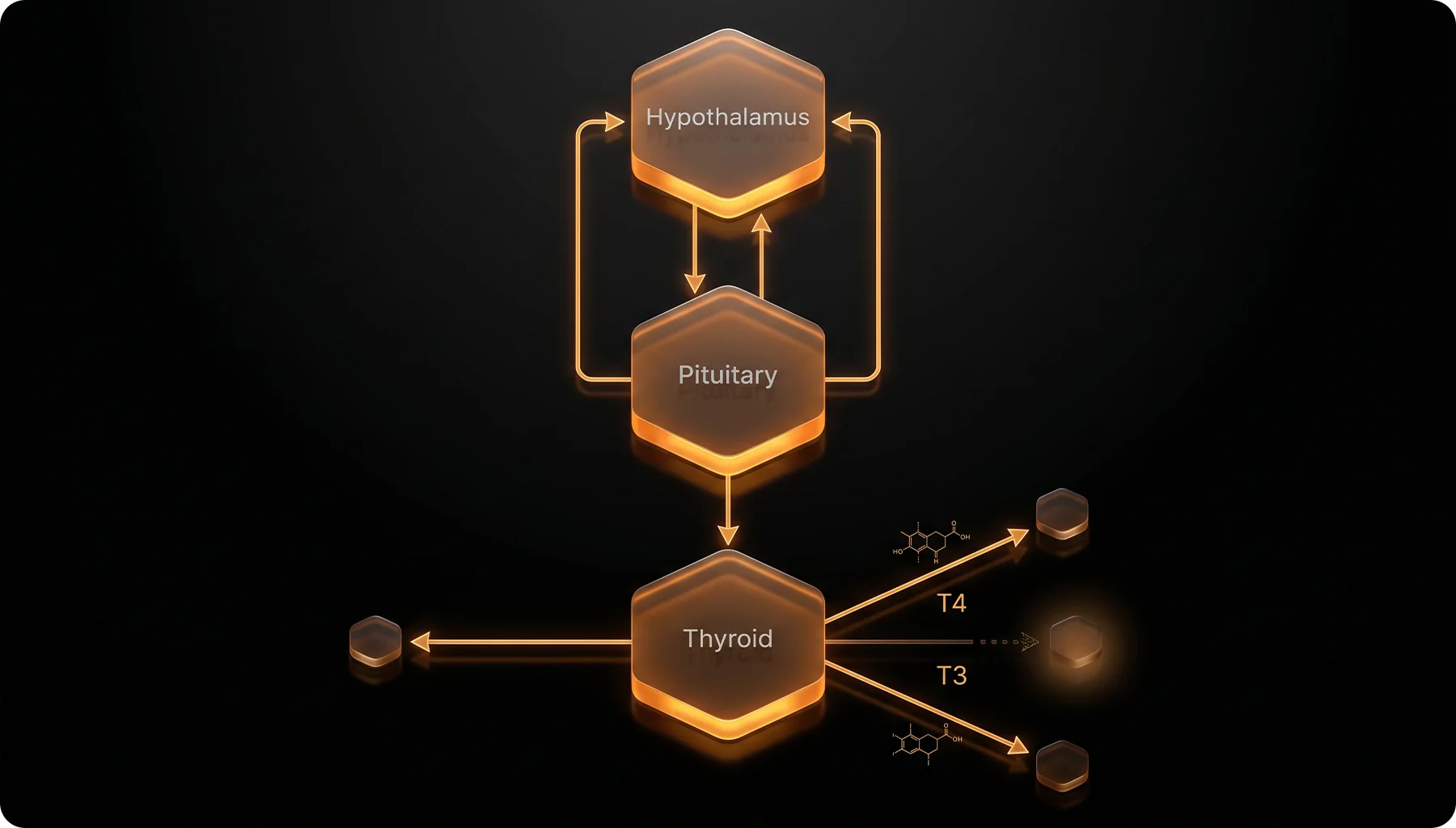
Image: Thyroid function isn’t one number. It’s an axis of signals — and TSH-only testing reads only the first link.
Hashimoto’s thyroiditis — an autoimmune condition in which the immune system attacks the thyroid gland — is the most common cause of hypothyroidism in the developed world, and it is frequently not tested for in standard care. Patients with Hashimoto’s often experience fluctuating symptoms and can test within normal TSH range even while their thyroid function is meaningfully compromised.
The problem with conventional thyroid care is often the testing itself. Relying on TSH alone — as most standard panels do — misses the full picture. Free T3 (the active thyroid hormone) and free T4 (the precursor) must both be measured to understand how well the thyroid is actually functioning. And thyroid antibodies (TPO and TgAb) are essential for identifying autoimmune involvement.
Benefits of Treating Thyroid Problems
- Restored Energy and Metabolic Function
Optimizing thyroid hormone levels restores the metabolic rate that suboptimal thyroid function has suppressed — producing significant improvements in energy, stamina, and the ability to function at full capacity. - Clearer Cognition and Better Mood
Thyroid hormone directly supports neurological function and neurotransmitter balance. Treating hypothyroidism often produces meaningful improvements in brain fog, mood, and motivation that patients sometimes mistake for antidepressant effects. - Improved Weight Management
Thyroid dysfunction is one of the most common hormonal drivers of weight gain that resists conventional interventions. Restoring optimal thyroid function improves metabolism and makes the body significantly more responsive to diet and exercise. - Healthier Hair, Skin, and Overall Physiological Function
Many of the cosmetic and physical symptoms of thyroid dysfunction — hair loss, dry skin, brittle nails, sluggish digestion — improve meaningfully when thyroid levels are properly optimized, reflecting the gland’s central role in whole-body physiology.
What Is Thyroid Disease?
The thyroid gland — a small, butterfly-shaped gland at the base of the neck — produces two primary hormones: thyroxine (T4) and triiodothyronine (T3). T4 is produced in large quantities and converted to the more biologically active T3 in peripheral tissues. These hormones regulate the metabolic rate of virtually every cell and tissue in the body, influencing energy production, protein synthesis, temperature regulation, heart rate, and the function of the digestive, nervous, and reproductive systems.
Hypothyroidism — the underproduction of thyroid hormone — is estimated to affect 20 million Americans, with many more undiagnosed. The most common cause is Hashimoto’s thyroiditis, an autoimmune condition that gradually destroys thyroid tissue. Primary hypothyroidism (where the thyroid itself is underperforming) is more common than secondary hypothyroidism (where the pituitary fails to adequately stimulate the thyroid), but both require different treatment approaches.

Image: Comfortable in cold air is what restored thyroid function looks like. Metabolism makes its own heat — when conversion actually happens.
Subclinical hypothyroidism — where TSH is mildly elevated but T4 and T3 remain technically within normal range — is a particularly contested area. Many patients with subclinical hypothyroidism experience significant symptoms and respond well to treatment, yet are often told their thyroid is “normal” and sent home without intervention. This is exactly the gap Dynamis is designed to fill.
At Dynamis, we test TSH, free T3, free T4, reverse T3, TPO antibodies, and TgAb antibodies — giving us a complete functional picture of your thyroid health, not just a single number.