
Joint Pain

Chronic joint pain isn't just a mechanical problem - and it shouldn't be managed with painkillers alone.

Joint pain isn’t structural. It’s systemic. Chronic inflammation, hormonal imbalance, and impaired tissue repair drive most cases — and anti-inflammatories rarely address the cause. At Dynamis, we use peptide therapy, hormone optimization, and clinical protocols to address pain at the root.

Eligibility for HSA or FSA reimbursement depends on your individual plan and medical necessity. Patients are responsible for confirming eligibility with their HSA/FSA provider. A prescription or Letter of Medical Necessity may be required.

Recognizing the Signs of Chronic Joint Pain

Joint pain is one of the most common complaints in adults over 40 — and one of the most undertreated in any meaningful sense. Most people are offered anti-inflammatory medications for symptom relief and advised to reduce activity. The underlying drivers — inflammation, hormonal imbalance, impaired regenerative capacity — are rarely addressed.

The experience varies: a persistent ache in the knees that makes stairs uncomfortable. Shoulder stiffness that limits overhead movement and disturbs sleep. Hip discomfort that alters your gait. Elbow or wrist pain that appears with repetitive use and lingers well after the activity ends. Morning stiffness that takes increasingly long to work through. The common thread is that these symptoms reduce your capacity to do things you want to do — and that they tend to progress if the underlying environment driving them isn’t changed.
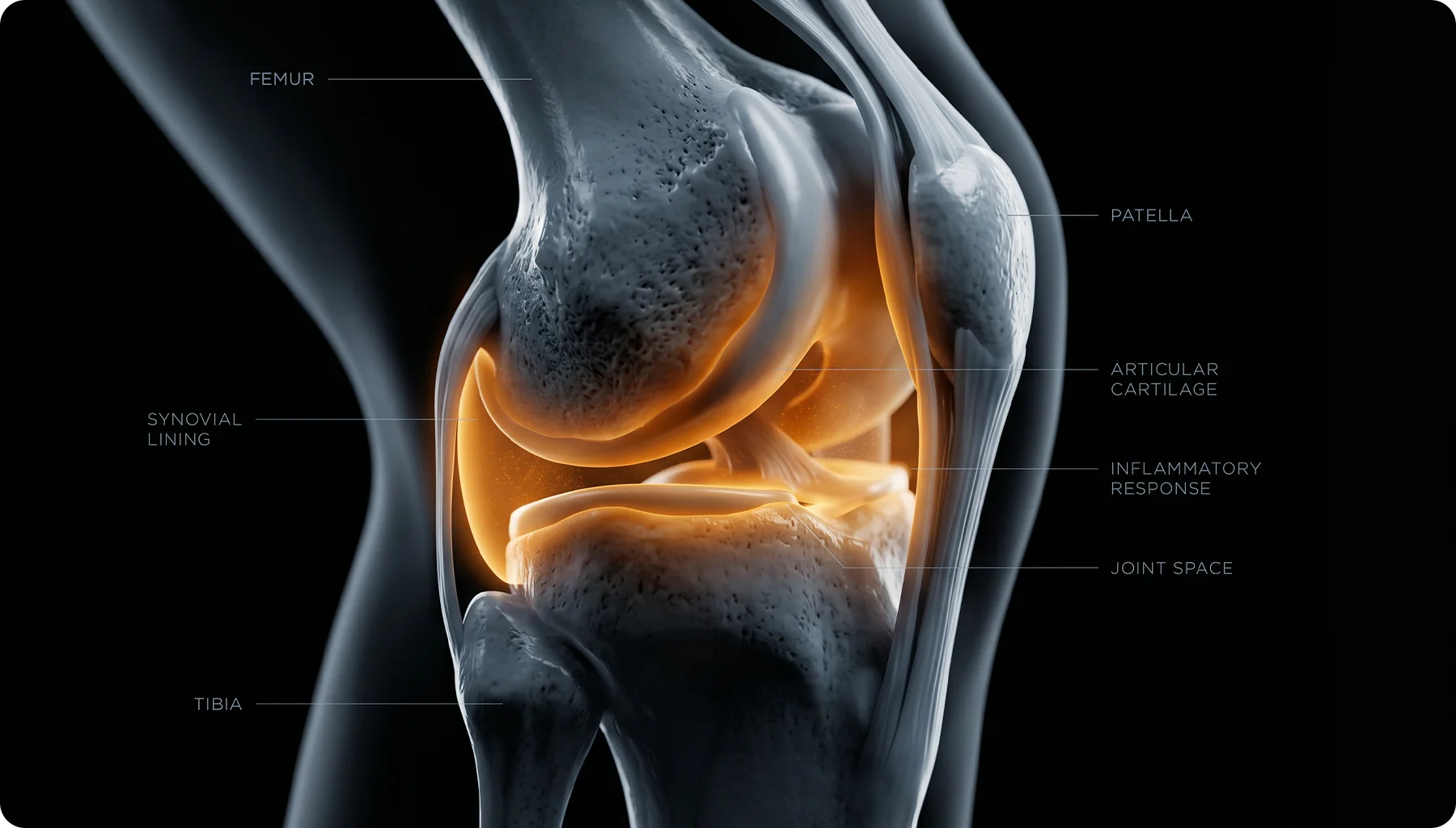

Image: The pain isn’t in the bone. It’s in the environment the bone lives in. Calm the inflammation and the joint follows.

Chronic inflammation is the primary physiological driver of most joint pain. Inflammatory cytokines degrade joint cartilage, impair synovial fluid production, and create a tissue environment that heals slowly and breaks down quickly. Hormonal factors accelerate this process: low testosterone reduces the body’s capacity for tissue repair and anti-inflammatory regulation. Low estrogen (in women) removes a protective influence on joint tissue and contributes to the joint pain many women experience during menopause. Growth hormone decline impairs the tissue regeneration that joints depend on.

Tendons and ligaments are especially vulnerable. Unlike muscle, they have poor blood supply and regenerate slowly without specific support. This is exactly where targeted peptide therapy — particularly BPC-157 — produces results that conventional approaches simply can’t replicate.

Benefits of Treating Joint Pain at Dynamis

  1. Reduced Pain and Inflammation
    Targeting the inflammatory pathways and tissue environment driving joint pain — through peptide therapy, hormone optimization, and appropriate supplementation — produces meaningful reductions in chronic pain without reliance on NSAIDs or other symptom-masking medications.
  2. Accelerated Tissue Repair and Healing
    Peptides like BPC-157 directly stimulate collagen synthesis and tissue repair in joints, tendons, and ligaments — accelerating recovery from both chronic wear and acute injury in ways that go beyond what rest and conventional therapy achieve.
  3. Restored Range of Motion and Function
    As inflammation decreases and tissue integrity improves, range of motion returns and functional movement becomes less restricted — helping patients return to training, daily activities, and quality of life that joint pain has been limiting.
  4. Slowed Long-Term Joint Deterioration
    By improving the hormonal and regenerative environment, Dynamis protocols address the conditions that accelerate joint breakdown — offering a genuine disease-modifying approach rather than just symptom management.


What Drives Chronic Joint Pain?

Joints are complex structures that depend on healthy cartilage, synovial fluid, ligaments, tendons, and the surrounding musculature to function without pain. When any of these components deteriorates faster than it can be repaired, pain and dysfunction follow. The question worth asking — and the one that conventional care too rarely pursues — is why deterioration is outpacing repair.

Chronic systemic inflammation is the most pervasive driver. Elevated inflammatory markers — C-reactive protein, IL-6, and others — reflect an immune environment that is actively degrading joint tissue. This inflammation is driven by a range of factors including poor metabolic health, chronic stress, sleep deprivation, and hormonal imbalance. It is not simply an inevitable consequence of aging — it is a measurable and addressable physiological state.

Hormones regulate the body’s repair capacity in ways that directly affect joint health. Testosterone supports the synthesis of connective tissue proteins and the anti-inflammatory pathways that protect joints. Estrogen protects cartilage integrity and joint lubrication in women. Growth hormone and IGF-1 drive the tissue regeneration that keeps tendons and ligaments functional and resilient. When these hormones decline, the body’s capacity to maintain joint integrity weakens.


Image: Stairs, hills, trails — all the things that hurt now don’t have to. Mobility is a function of what’s happening at the joint, not how old you are.

Peptide therapyparticularly BPC-157 and TB-500 — represents a targeted therapeutic approach to tissue repair that addresses what hormonal optimization alone cannot. BPC-157 promotes angiogenesis (new blood vessel formation) in connective tissue, stimulates collagen synthesis, and accelerates healing in structures with naturally limited blood supply. TB-500 promotes cell migration and tissue regeneration more broadly. Together, these tools address joint health at the cellular level.


Awaken the Warrior from within

Call (469) 214-3404 or fill out the form, and our team will reach out to you right away.

Joint Pain At a Glance

Common Symptoms

Chronic joint discomfort, stiffness, swelling, reduced range of motion, slow recovery after activity, tendon and ligament pain

Treatment Approach

Peptide therapy (BPC-157, TB-500), hormone optimization, anti-inflammatory support, and health coaching

Typical Protocol Duration

Initial treatment cycle of 8-12 weeks; ongoing maintenance as needed

Getting Started

Free online assessment + targeted lab work

Dynamis is a proud Member of the Tele-Health Association.
Awaken the Warrior from within

Call (469) 214-3404 or fill out the form, and our team will reach out to you right away.

How Dynamis Treats Joint Pain

Step 1
Free Assessment

You complete a short health questionnaire covering your joint symptoms, health history, and activity goals. No cost, no commitment.

Step 2
Targeted Lab Work

We coordinate lab work assessing inflammatory markers, hormone levels, and metabolic indicators relevant to joint health and tissue repair capacity.

Step 3
Personalized Protocol

A board-certified provider reviews your labs and meets with you via telehealth to build a protocol targeting the specific drivers of your joint pain.

Step 4
Ongoing Monitoring and Coaching

Your provider tracks progress and adjusts your protocol at regular intervals. Your health coach supports lifestyle, nutrition, and movement optimization between visits.


Treatment Options for Joint Pain at Dynamis


Image: Joints that move well don’t ask permission. They handle terrain instead of avoiding it.

BPC-157

The cornerstone of Dynamis’s joint and tissue repair protocols. BPC-157 is a regenerative peptide derived from a protective protein found in gastric juice that promotes healing in joints, tendons, and ligaments by stimulating collagen synthesis, new blood vessel formation, and the body’s natural repair processes.

TB-500 (Thymosin Beta-4)

TB-500 promotes tissue regeneration, reduces inflammation, and supports cell migration and repair across multiple tissue types. It is particularly effective for systemic inflammation affecting multiple joints or for patients recovering from widespread soft tissue injury alongside joint pain.

Hormone Optimization

Restoring testosterone and, where appropriate, estrogen and growth hormone support — creates the systemic regenerative and anti-inflammatory environment that makes other joint treatments more effective. Hormonal optimization is frequently the missing piece in patients who haven’t responded adequately to conventional treatment.

Anti-Inflammatory Support

Targeted nutritional and supplementation support — including omega-3 fatty acids, curcumin, and other evidence-based anti-inflammatory compounds — is incorporated into protocols where appropriate to reduce the systemic inflammatory burden driving joint deterioration.

Health Coaching

Movement quality, body composition, sleep, and stress management all directly affect joint inflammation and tissue repair capacity. Your Dynamis health coach works with you on the lifestyle variables that compound the results of your medical protocol.

Frequently Asked Questions

Chronic joint pain most commonly results from a combination of chronic inflammation, cartilage and connective tissue breakdown, and impaired repair capacity. Hormonal factors (low testosterone, estrogen decline, growth hormone reduction), poor metabolic health, and chronic stress all create a physiological environment that accelerates joint deterioration and slows healing.

BPC-157 has a favorable safety profile in clinical and research contexts, with minimal reported side effects. At Dynamis, it is prescribed following a comprehensive health evaluation and monitored as part of an ongoing protocol. Your provider will review your health history to confirm appropriateness before prescribing.

NSAIDs reduce inflammation symptomatically but don’t address the underlying drivers of joint deterioration. Chronic NSAID use carries well-documented risks including gastrointestinal damage and cardiovascular effects. Dynamis protocols aim to improve the hormonal and regenerative environment that drives joint health – producing improvements that persist beyond the treatment window rather than masking symptoms temporarily.

Yes, directly. Low testosterone reduces connective tissue repair capacity and upregulates inflammatory pathways. Estrogen decline in women removes a protective influence on cartilage and joint lubrication. These are real, measurable physiological mechanisms – not speculative connections.

Many patients notice reduced inflammation and improved comfort within 4-8 weeks of starting peptide therapy. Structural tissue improvements – greater range of motion, improved resilience – typically develop over 2-4 months of consistent treatment.

Our Five Stars

From one warrior to another

We’re proud of the results our patients achieve and the trust they place in our team. Read our reviews below to see why men and women across the country choose Dynamis for hormone therapy and medical weight loss.

Dynamis Online

Phone: (469) 214-3404

Hours: Mon-Fri 9AM-4PM